
Website Security Monitoring Service for Business
 SecureAX
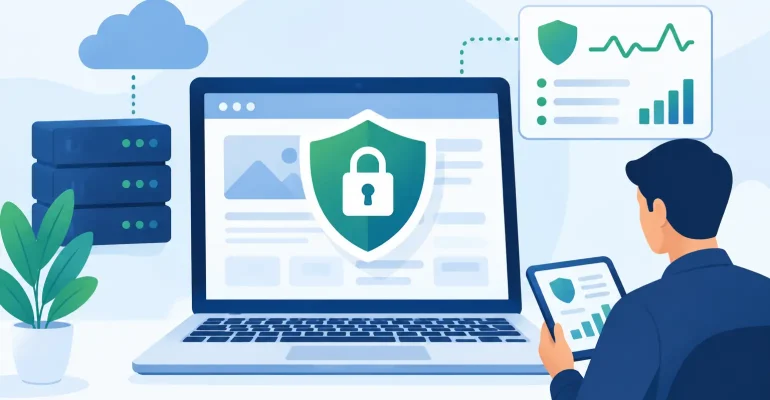
A website security monitoring service is not simply an alarm for when a website goes offline. For a business, it is an early-warning system for the public-facing platform that supports inquiries, online sales, customer trust, partner access, and brand credibility. A defaced page, malicious redirect, expired certificate, or undetected malware infection can create operational and reputational damage long before an internal team notices it.
Many businesses invest in a well-designed website, then treat security as a one-time project completed at launch. The reality is different. Website software changes, plugins are updated, credentials are reused, vulnerabilities are disclosed, and attackers continuously scan the internet for easy entry points. Ongoing monitoring helps turn website security from a reactive cleanup exercise into a controlled business process.
What a Website Security Monitoring Service Should Watch
Effective monitoring looks beyond a basic uptime check. Uptime matters, but a website can be available while serving malicious content, exposing customer data, or running outdated components that are vulnerable to attack.
A well-managed service should monitor the availability and response behavior of the website, including whether key pages are accessible and whether the site is unexpectedly slow. It should also check for malware, unauthorized file changes, suspicious redirects, blacklisting indicators, and changes to domain or SSL certificate status. These controls help identify problems that may otherwise be discovered first by a customer, a search engine, or a fraud victim.
The scope depends on the website and its role in the business. A simple corporate site may require monitoring of uptime, malware, certificates, administrative access, and core software updates. An e-commerce or customer portal environment may need closer attention to payment workflows, login activity, database protection, web application vulnerabilities, and suspicious traffic patterns.
Monitoring alone does not prevent every incident. Its value is in reducing the time between a threat emerging and the business taking the right action. That time is often the difference between removing a suspicious file and managing a full website compromise.
Why Website Incidents Become Business Incidents
A website compromise rarely stays confined to the website team. When visitors see browser warnings, spam pages, or redirects to suspicious destinations, they may assume the whole business is unsafe. Sales teams lose leads. Marketing campaigns send traffic to a damaged destination. Customer service teams must answer questions they were not prepared to receive.
Search visibility can also suffer. Search engines may flag compromised websites, while email security systems can block messages that direct recipients to a known malicious domain. For organizations that depend on web forms, online catalogs, bookings, or application portals, downtime directly interrupts normal business activity.
The financial impact is not limited to lost transactions. Incident response may involve emergency forensic work, malware removal, web development support, customer communications, security review, and recovery from backups. If an attacker obtains personal information, the organization may also face contractual, regulatory, and notification obligations.
This is why responsible monitoring combines technical alerts with accountable human response. An alert at 2:00 a.m. is useful only if someone can assess whether it is a false positive, a hosting issue, a website defect, or a genuine security event that requires immediate containment.
The Difference Between Monitoring and Website Protection
Businesses sometimes assume that managed hosting, a firewall, or a backup service automatically covers every website security requirement. Each service contributes to protection, but they solve different problems.
A web application firewall can block known malicious requests and reduce exposure to common attack techniques. Secure hosting can provide protected infrastructure, patching at the server layer, resource isolation, and access controls. Backups create a recovery path if the site must be restored. Website monitoring provides visibility across these layers and identifies conditions that require action.
For example, a backup will not stop malware from collecting form submissions. A firewall may not detect that an authorized administrator account has been misused. Hosting-level monitoring may not recognize that a plugin update has broken a critical checkout page. The right approach is layered: prevent what can be prevented, monitor what remains possible, and maintain tested recovery options.
What Happens When a Threat Is Found
The quality of a website security monitoring service is best measured after an alert occurs. Businesses should know what the provider will do, how quickly it will respond, and where responsibility sits between the web developer, hosting provider, internal IT team, and security partner.
A clear response process normally starts with validation. Not every alert represents an active attack. A certificate renewal issue, a planned maintenance window, or a third-party service disruption can trigger warnings that need to be interpreted correctly.
When a genuine threat is confirmed, the immediate priority is containment. This may involve restricting access, blocking malicious traffic, taking a compromised page offline, changing credentials, or isolating affected files. The next steps are investigation, remediation, and recovery. Malicious code must be removed, the underlying entry point must be closed, and the website must be checked before it returns to normal operation.
A reliable provider will also explain the incident in business terms. Technical detail matters, particularly for IT teams, but decision-makers need to understand what happened, what data or systems may have been affected, what was done, and what controls should be improved. Clear communication prevents confusion during a stressful event.
Choosing a Website Security Monitoring Service
The lowest-cost monitoring tool is not always the lowest-cost choice over time. An automated scanner can provide useful alerts, but it may leave your staff to determine what the results mean and find separate vendors for remediation. For organizations without dedicated security personnel, this can create avoidable delays.
When evaluating a provider, ask whether monitoring includes malware detection, website availability, SSL certificate checks, blacklist monitoring, vulnerability awareness, and unauthorized change detection. Confirm whether the service covers your content management system, plugins, themes, custom code, and hosting environment, rather than only scanning the public-facing pages.
It is equally important to ask about response. Is support available when an urgent incident occurs? Are remediation services included, quoted separately, or handled by another company? Can the provider coordinate with your web developer and hosting environment? A fragmented support model can extend an outage while vendors debate where the problem began.
For regional businesses, operational fit matters as much as the technical feature list. A provider should understand your business hours, escalation contacts, data handling requirements, and the relationship between your website, email, cloud systems, and backups. SecureAX applies this integrated approach by combining managed hosting, security services, backup, and responsive technical support under one accountable service model.
Monitoring Needs Regular Review
Website risk changes as the business changes. A site that began as a simple brochure may later add customer forms, online payments, recruiting portals, downloadable documents, marketing automation, or connections to internal systems. Each addition can create new dependencies and new security considerations.
Review monitoring coverage after a website redesign, hosting migration, major plugin installation, domain change, or new e-commerce function. Confirm that backup schedules still match the value and frequency of website changes, and test restoration before an incident forces the issue. A backup that has never been restored is an assumption, not a recovery plan.
Access should also be reviewed regularly. Former employees, agencies, contractors, and developers may retain administrative access longer than intended. Multi-factor authentication, unique user accounts, and documented ownership of domains and hosting accounts reduce the risk of losing control when a relationship changes.
A secure website is not one that never receives suspicious traffic. Every internet-facing site will attract automated probes and attack attempts. The goal is to make compromise harder, detect warning signs early, respond with discipline, and restore normal operations without unnecessary disruption. With the right monitoring and accountable support behind it, your website can remain a dependable part of the business rather than an unmonitored source of risk.